Home/Case Studies/Lead to Order

CASE STUDY · Home-service business guidance

Lead to Order

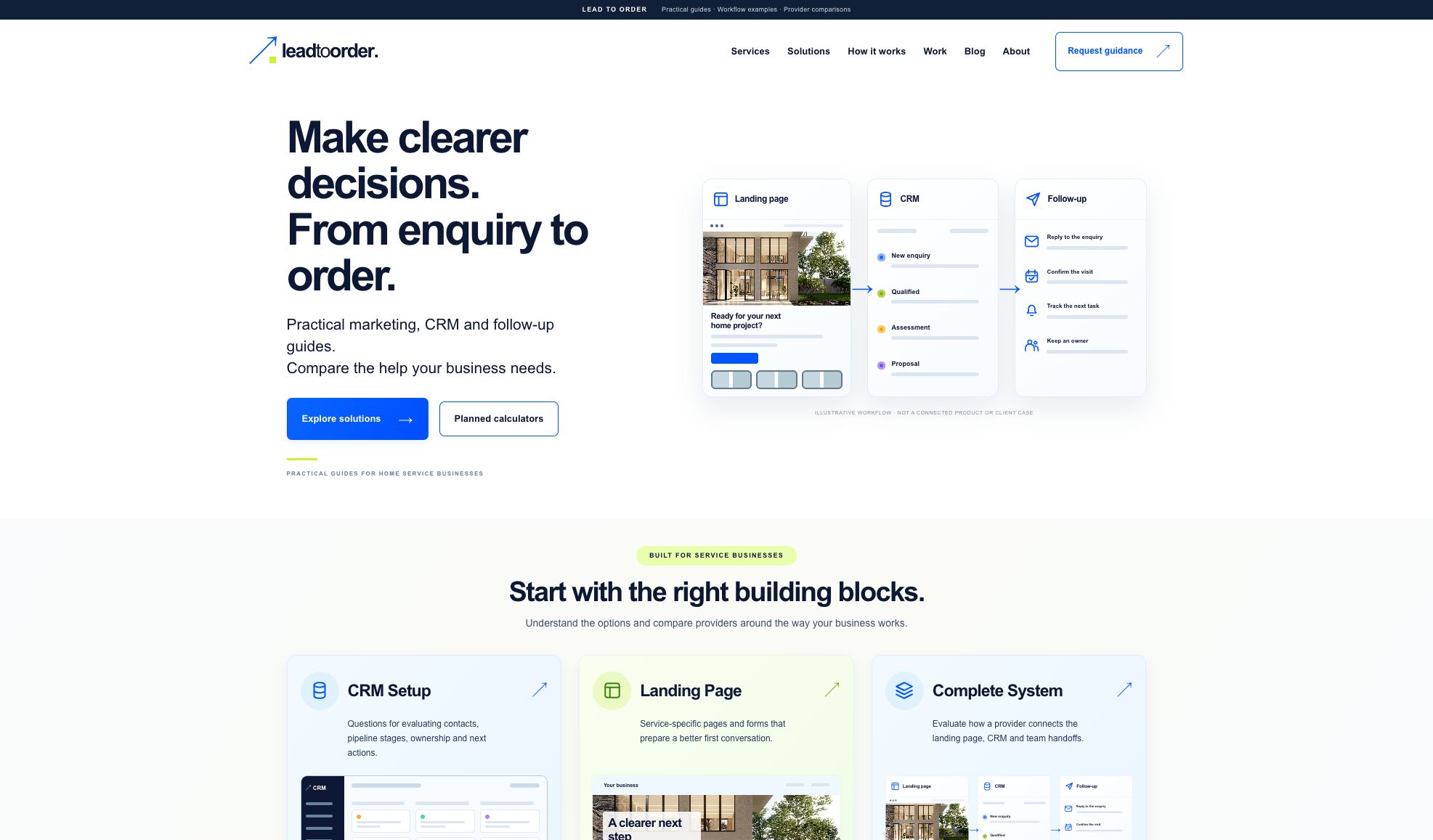
Home-service business owners need useful guidance between an enquiry and an agreed job. I created Lead to Order as an informational portal for understanding that workflow and comparing independent marketing, CRM and follow-up providers.

Website · Editorial platform · Technical SEO
Visit live website
Key outcomeEditorial platform launched

Website live · Organic-search foundation verified

Project brief

What I created and why it matters

My role
Concept, website and editorial experience
Idea
Connect practical knowledge to the work between an enquiry and an order.
Audience
Owners and operators of home-service businesses.
Goal
Help readers improve a workflow and evaluate outside help.
Distinctive approach
Actionable checklists and templates alongside independent-provider questions.
Design
Clear editorial pages, workflow illustrations and structured provider guides.
Technology
Next.js · React · TypeScript · Vinext · Cloudflare Workers · GitHub Actions
01

THE ASSIGNMENT

The project and its purpose.

Home-service business owners need useful guidance between an enquiry and an agreed job. I created Lead to Order as an informational portal for understanding that workflow and comparing independent marketing, CRM and follow-up providers.

02

THE SOLUTION

What I designed and implemented.

I built the publication structure, provider guides and illustrative workflows, then added five researched articles with original editorial images. Topics, search and format filters connect practical checklists and templates. The existing enquiry form remains enabled, while optional analytics waits for the visitor’s choice.

03

THE OUTCOME

Editorial platform launched

The published website contains eleven articles and guides, nineteen provider and workflow pages, and a canonical sitemap with forty-five indexable content URLs. Production checks confirmed the page metadata, intended indexing rules and preserved enquiry interface. Ahrefs completed the post-release crawl with Health Score 100 and no error URLs.

WORK COMPLETED

What the website includes.

  • Eleven articles and practical guides
  • Nineteen provider and workflow pages
  • Topic navigation, search and format filters
  • Original editorial illustrations and responsive image delivery
  • Canonical sitemap and page-specific social metadata
  • Preserved HubSpot enquiry intake and optional analytics controls

Verified project updates

What changed, why and what was verified

Editorial and provider-guidance launch

What changed
I published the five illustrated articles alongside the existing guides and provider information.
Why it matters
Give readers checklists, templates and evaluation questions they can use.
Verified result
Eleven articles and nineteen provider/workflow pages are live; search and topic routes passed verification.

Canonical organic-search launch

What changed
I removed the global preview indexing block and published the canonical sitemap.
Why it matters
Expose useful content while keeping utility and filtered views out of the index.
Verified result
Forty-five content URLs are indexable; forty-eight route records passed public checks. The post-release Ahrefs crawl reported 49 internal URLs, Health Score 100 and 0 error URLs.

Website creator credit

What changed
I added a discreet website-creation credit in the footer.
Why it matters
Identify the website creator separately from article authors.
Verified result
The production homepage and a public internal page each show one credit linking to Koliesnikov.com.

Current rollout boundaries

The implementation and the next stage

  • Separate article submission and durable notification delivery are not claimed as implemented in this case.
Next case study

sgeo.blog

Source-led publication live